Invite-only beta
Read Scripture in the world it describes.
Lands & Lineage sets the Bible beside a map of its world. As you read, see where each passage takes place, who is involved, and what the historical sources say, with every claim cited.
- 1,342
- places, each with its own page
- 3,145
- people, with their families
- 4,454
- articles, fully cited
- 274
- hours of narration
Reading
Scripture and its world, side by side.
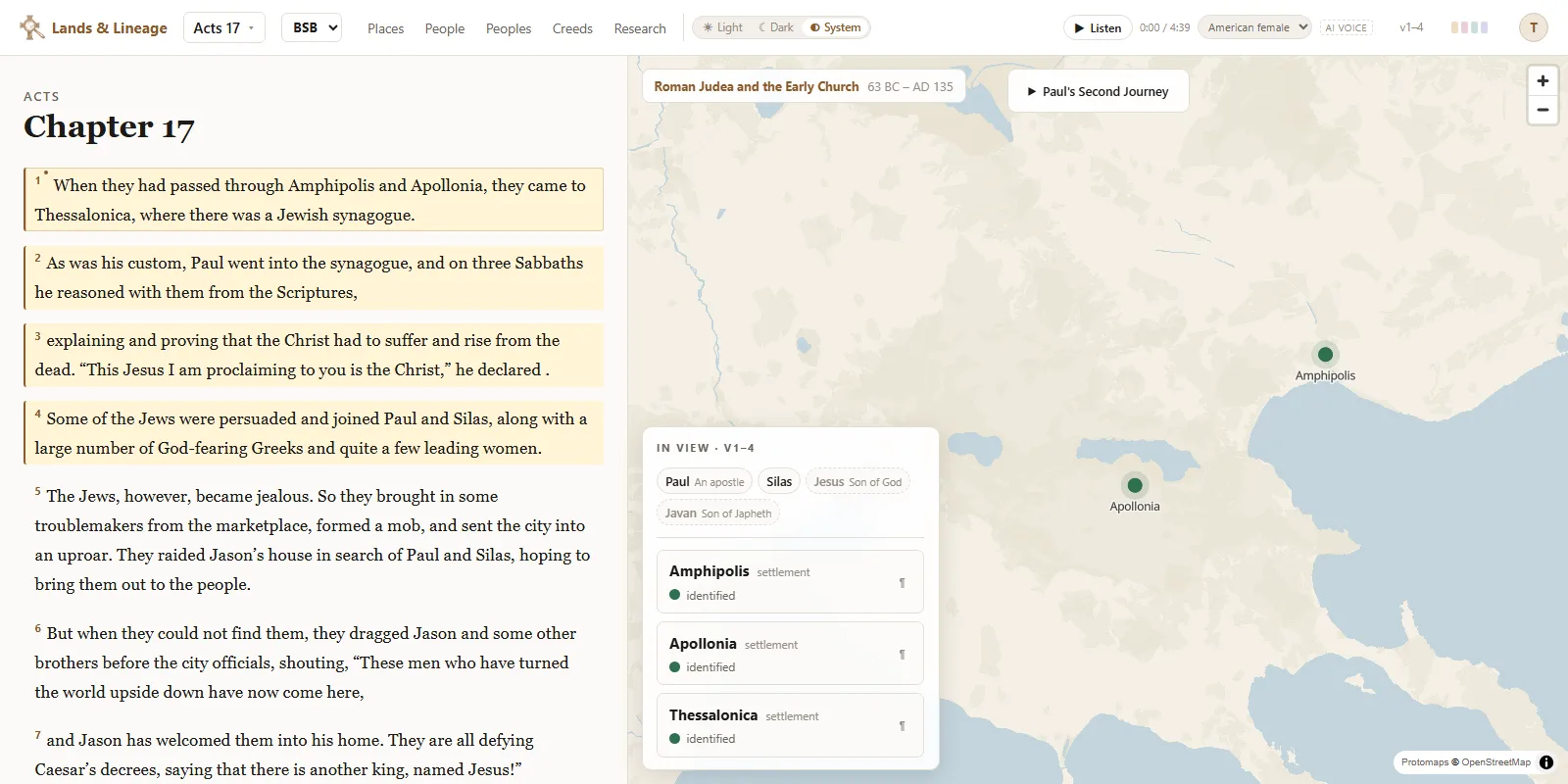
Read from Genesis to Revelation in one continuous scroll. The map follows along, showing each passage’s places beneath the borders of its own time, and journeys such as Paul’s unfold as you read.
Prefer to listen? The narration moves the map just as reading does.
Translations
Two translations, compared word by word.
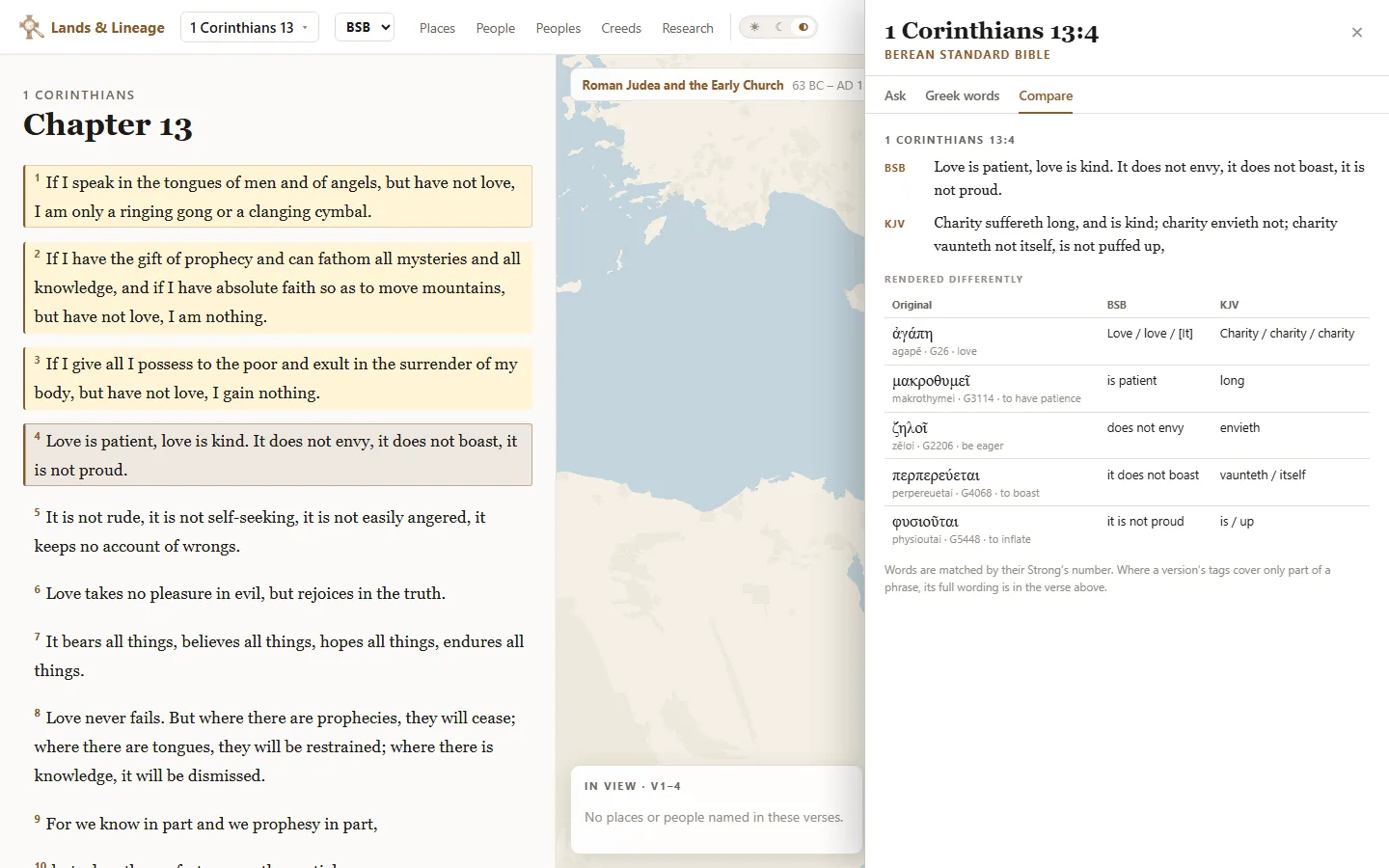
Read in the Berean Standard Bible or the King James Version. Compare any verse to see both side by side, with the words they translate differently traced back to the Hebrew or Greek beneath them.
Hebrew and Greek
The original words behind every verse.
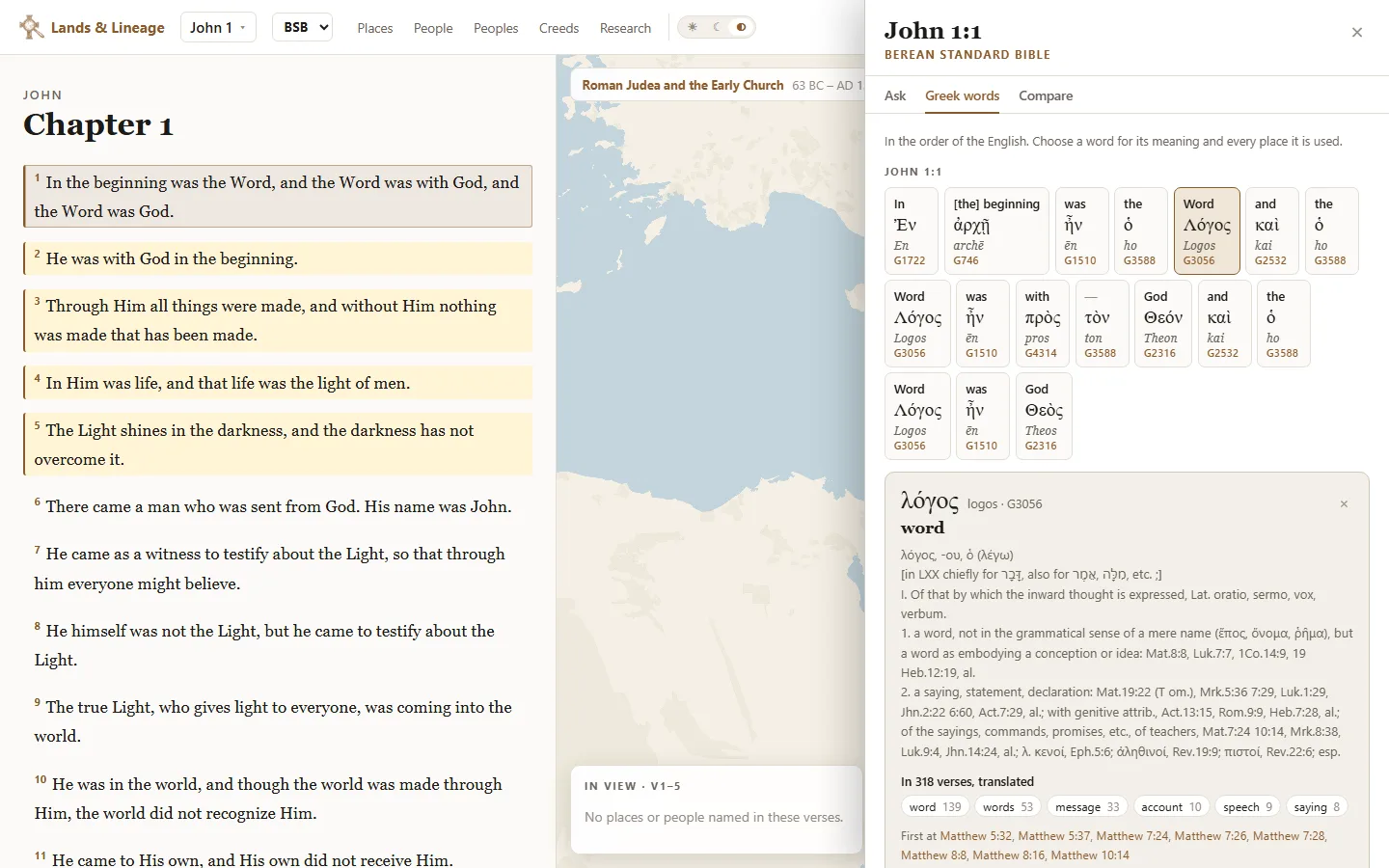
See the Hebrew, Aramaic or Greek beneath any verse, word by word in the order of the English. Choose a word for its definition, how it is translated, and every verse in which it appears.
Notes and bookmarks
Keep your own notes as you read.
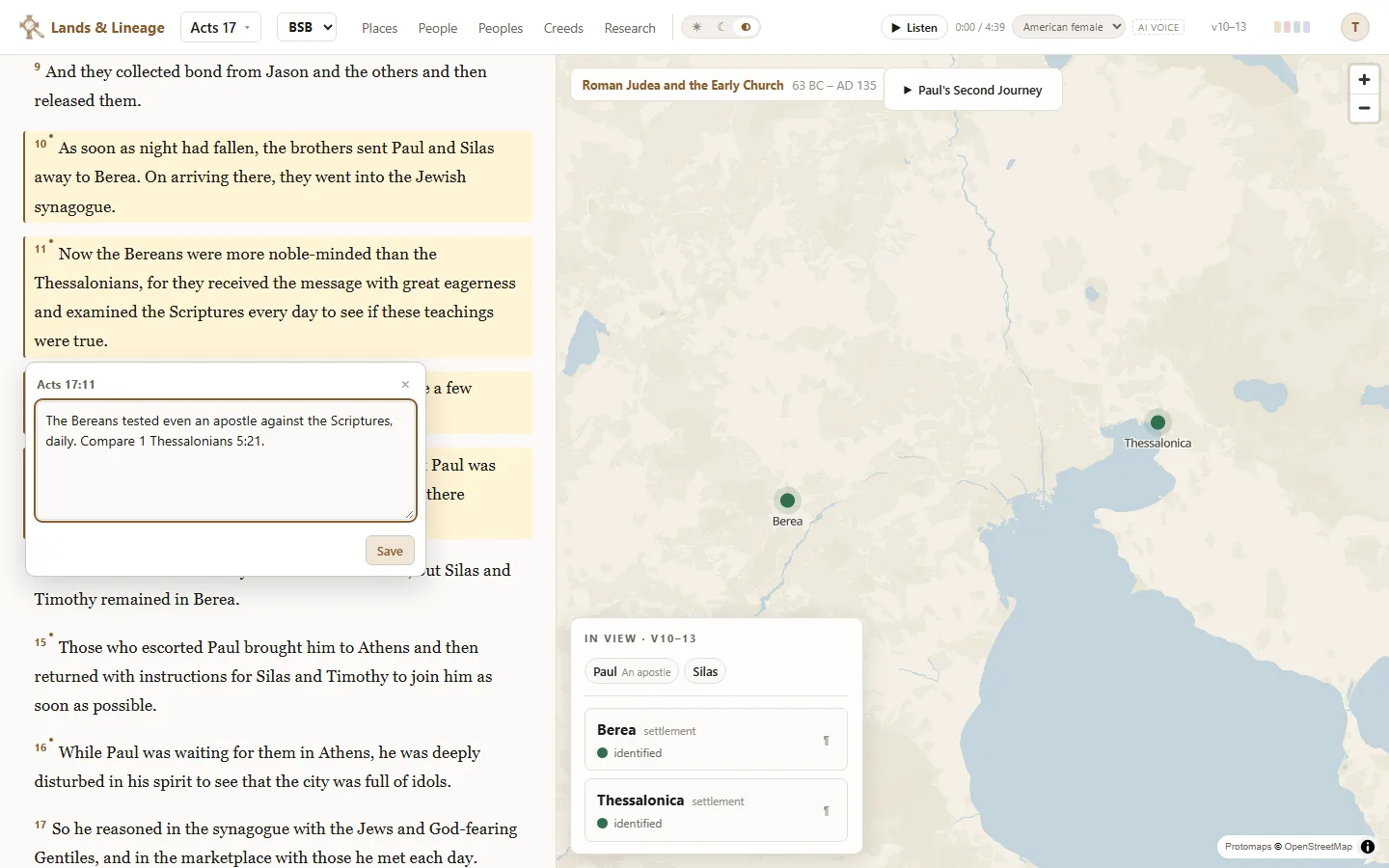
Select a verse, or drag across several, to write a note or to mark your place with one of four coloured bookmarks. On a phone, press and hold a verse.
Places
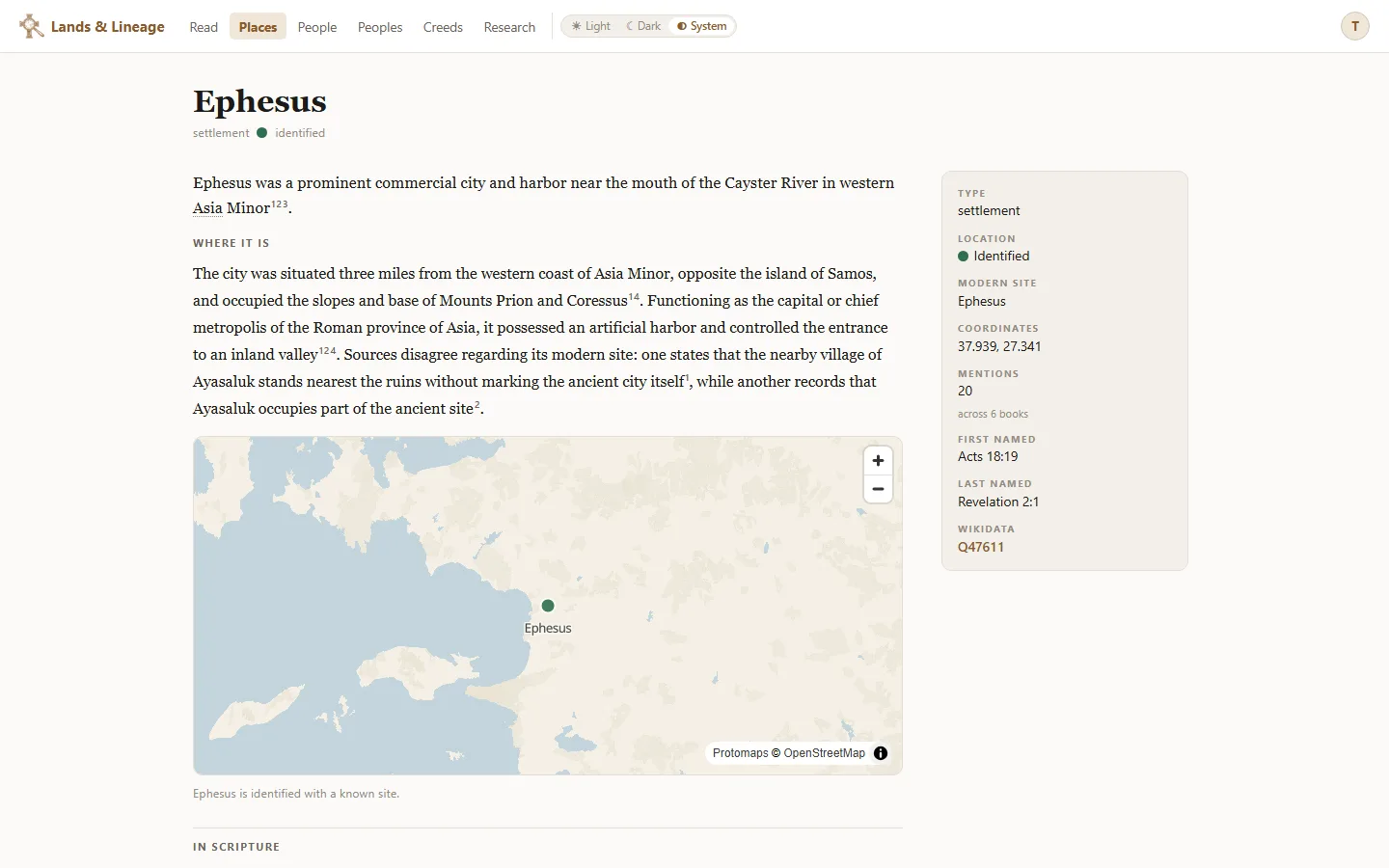
Every place, located and explained.
Each of the 1,342 places named in Scripture has its own page: where it was, how confident scholars are of its location, and what Scripture and the reference works say about it.
People
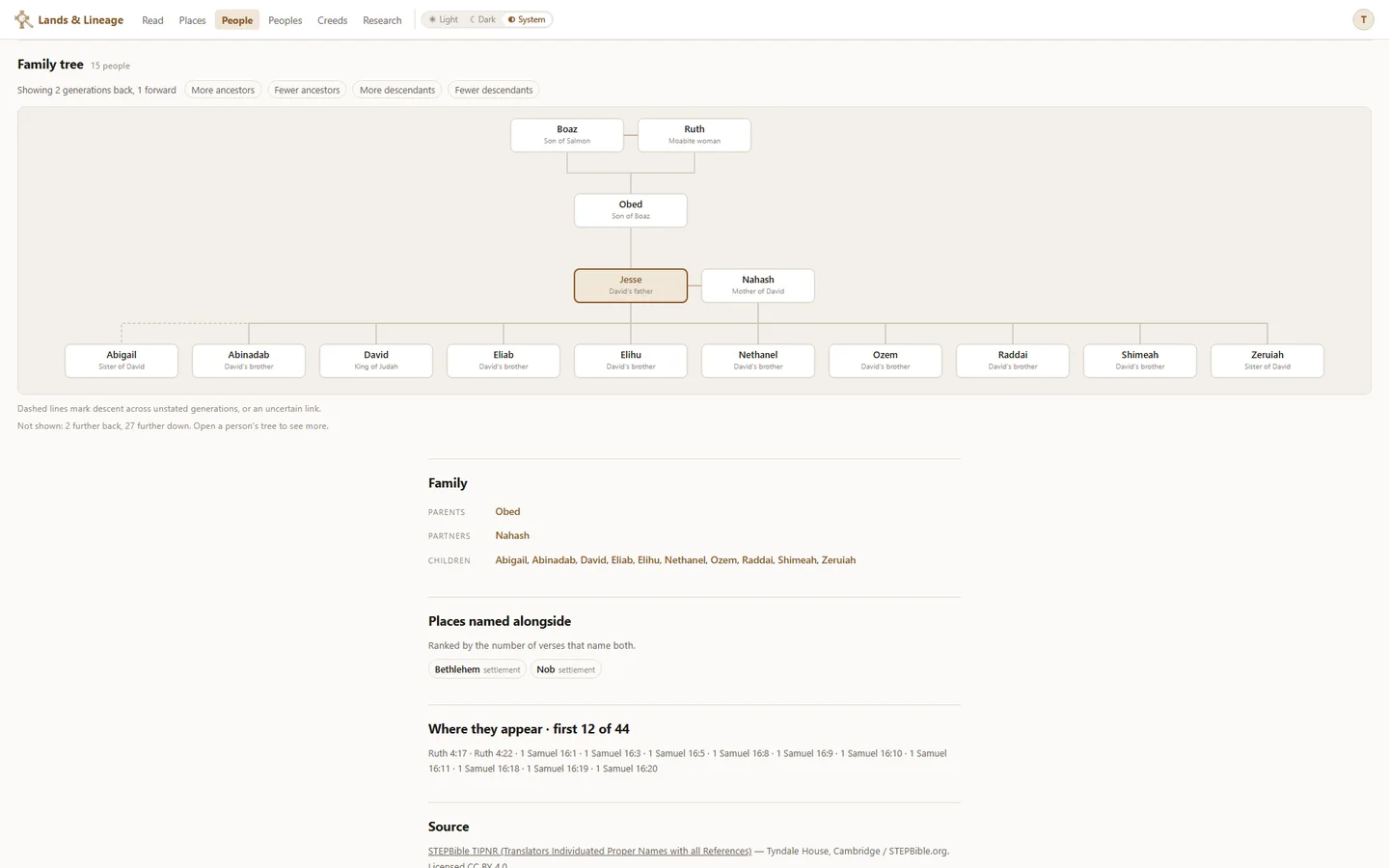
The people of Scripture, in their families.
Follow the people of the Bible through their family trees, from one generation to the next. Every name opens a page of its own.
Sources
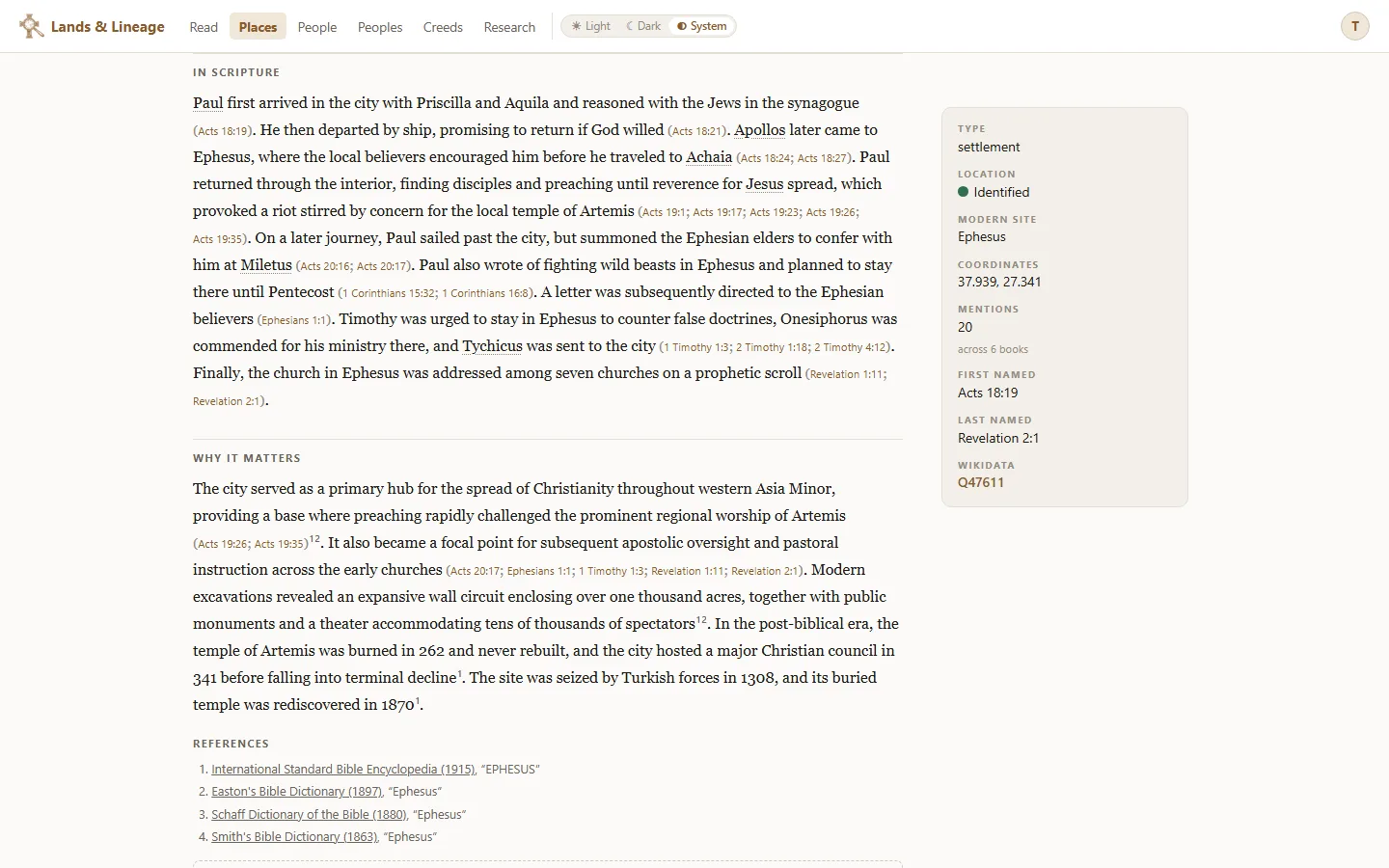
Grounded in sources you can check.
Articles on places, people and peoples draw on Scripture and classic reference works, and every statement is footnoted to its source, so you can read it for yourself.
Research
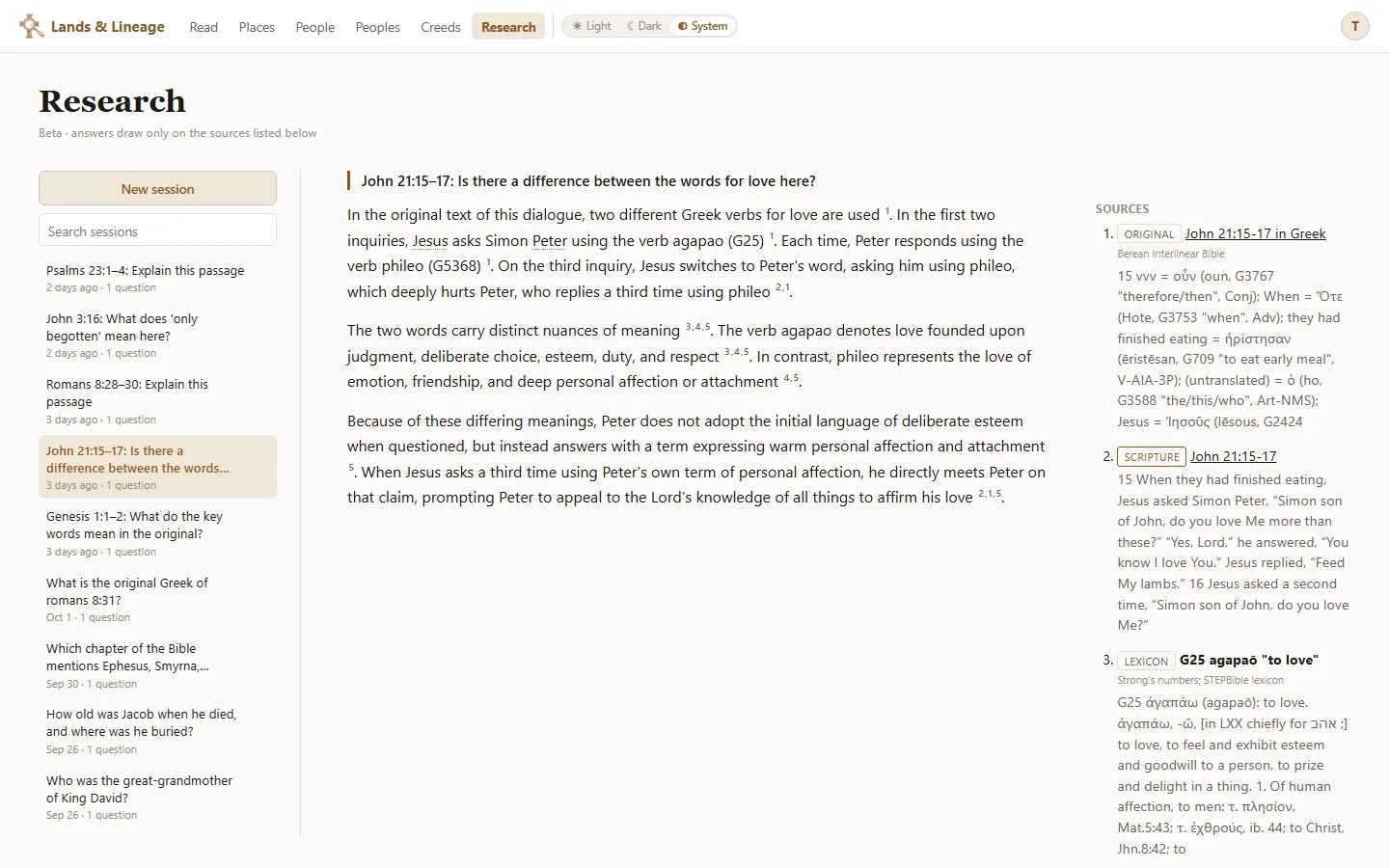
Ask questions. Get cited answers.
Ask about a person, a place, an event or a doctrine, or select a passage as you read and ask about it there. Answers draw on Scripture and its original languages, the historic creeds and confessions, and trusted reference works, with every claim cited and each step of the research shown.
Now in an invite-only beta.
If you have an invitation, sign in to start reading. For anything else, contact support@landsandlineage.com.
Sign in